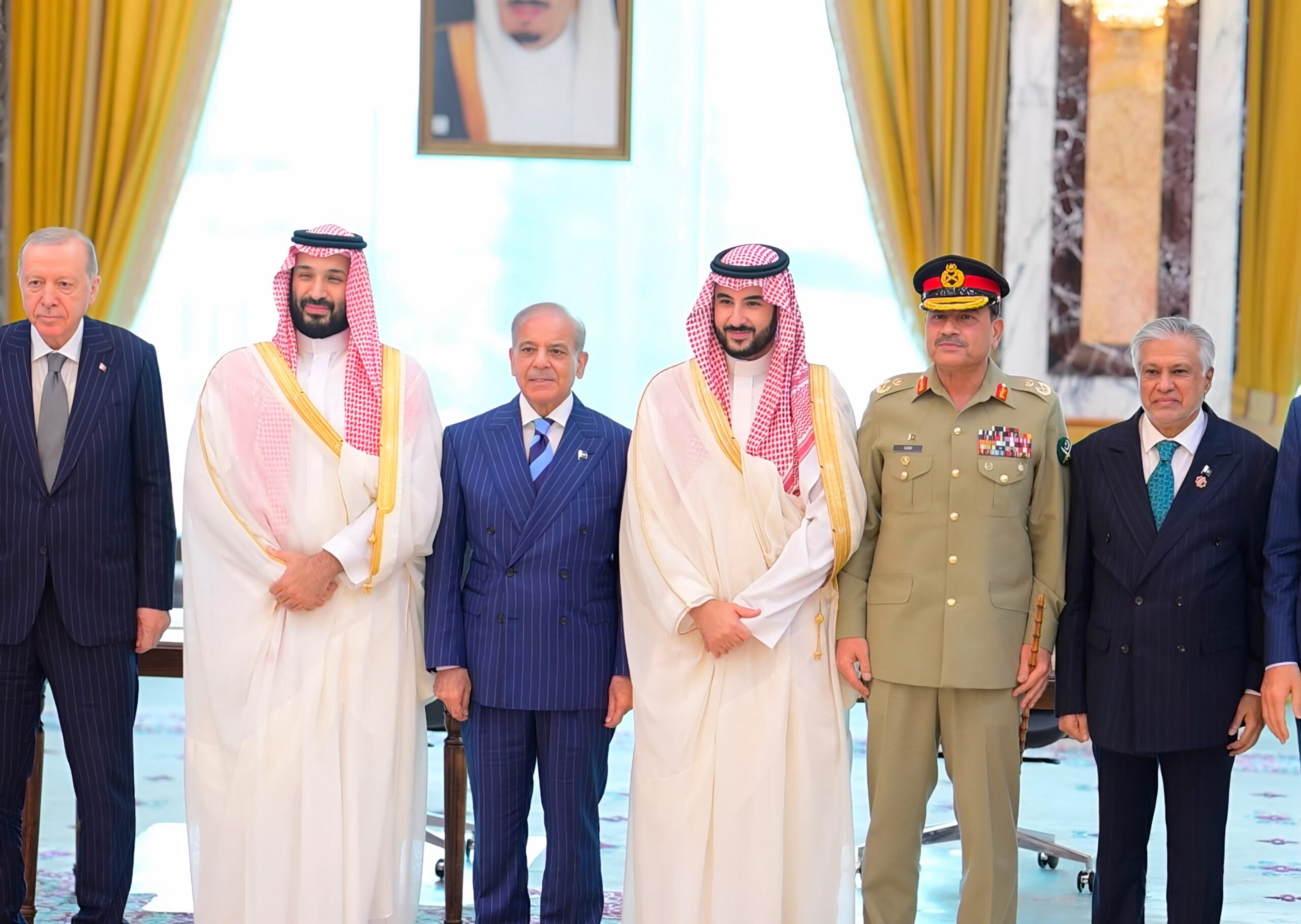
Istanbul/New Delhi Sep 24 (SocialNews.XYZ) Alliances play a crucial role in international politics. The rationale for any alliance is shared threat. Once in the alliance, commitment to the allied partners should come naturally. More important for any alliance is the clarity of potential threats or the goal to be achieved. It should be clear from the outset what threat the alliance is supposed to keep at bay or what goal is to be achieved. Relatedly, the nature and intensity of the threat also matter: it should be seen as threatening the allied partners to a great degree, if not equally.
Experts cite that, for example, during the Cold War, the US had allied with the European countries to deter the Soviet threat because the areas that the Soviets might have threatened mattered to Washington and to the European countries. So, they were committed to bear the cost for shoring up the alliance and for a war if it were to break out.
In short, the allied partners should be better off in alliance than without it. Therefore, clarity of a threat, its relevance across the allied partners and overall costs paid for being in the alliance remain essential for its possible success and survival. Arguably, an alliance can have a broader and long-lasting strategy to deal with a common threat; or it can be short-lived, meant to achieve an immediate goal, like the alliance formed by the US, the Soviet Union and the UK during the Second World War to fight the Nazis. These threats can either disappear or weaken over a period of time, impacting the alliance.
Setting against this broader understanding, what do the nature and orientation of the Mecca Agreement say about the Pakistan, Saudi Arabia and Turkey alliance? Likewise, the tripartite military cooperation plan among Israel, Greece, and Cyprus needs to be analysed in the context of the broader understanding of the alliance. Like the Mecca Agreement, the potent threats to Israel, Greece and Cyprus vary greatly. Rather than meeting the core requirements of an alliance, these seem reactionary alignments.
In the case of Turkey taking military action against Cyprus, what are the odds that Israel may get involved? Notably, Turkey was the first Muslim country to recognise Israel in 1949. However, bilateral ties between Turkey and Israel started nosediving after 2008.
How does a Turkish attack threaten Israel? More importantly, is the strongest ally, in this case, Israel, ready to bear more costs, for example, in defending Cyprus if it were under attack from Turkey? That too when there is no collective defence commitment that an attack on one state will be considered an attack on all.
Signed on August 7, in the holy Muslim city of Mecca among the three major Muslim countries — Pakistan, Saudi Arabia, Turkey — the Mecca Agreement generated a lot of buzz. Some argued that the first time three major Muslim countries had come together, and it might bring a major shift in regional geopolitics and the world at large, including weakening US influence in the West Asian region, overlooking the fact that it’s the US’s inability to ensure the security of its allies that has led to realignments.
Some even argued that the strengths of the three countries are complementary: if Saudi Arabia has deep pockets and energy reserves, Turkey has an advanced and expanding defence industry, and Pakistan has a powerful military with nukes.
But the main question remains what common threat the three countries share that they need to address together. Do they share a common sphere of influence? In fact, they are non-contiguous and belong to three different regions that have different regional politics and conflicts. When and how the principle that an attack on one country would be considered an attack on all three would be invoked remains unclear.
For example, if Pakistan invokes a military riposte from India due to the former’s support for subversive activities in India, will Saudi Arabia or Turkey send military support to Pakistan? Likewise, if Saudi Arabia were to be attacked by Iran or the Houthis for hosting the American military bases, will Islamabad or Ankara attack Iran or the Houthis? As far as Turkey is concerned, its main threat is internal, not external. So, if it decides to take action against the Kurdish forces, will Pakistan or Saudi Arabia join it by sending their militaries?
Top analysts argue that, just because the three countries share religious identity, does not mean they can synchronise their varied threats into a common enemy. They happen to be Muslim countries, but they don’t look into each other’s eyes on so many issues. One point to vindicate that religious identity does not necessarily change into an alliance, and such an adventure is unlikely to last; no regional country from the Muslim West Asian region, apart from Saudi Arabia, has joined the alliance.
In fact, all three countries had to send a message to Tehran that it was not directed at Iran, a major Shi’ite Muslim country but not a party to it.
Furthermore, in 2019, Pakistan and Turkey were part of a Malaysia-led campaign to replace or weaken Saudi Arabia as the leader of Muslim countries and held the Kuala Lumpur Summit. Interestingly, the other country to oppose the most after Saudi Arabia was the United Arab Emirates (UAE), and now these countries are fighting a proxy war against each other in Sudan, yet another Muslim country. What is the significance of religious identity in such contexts?
The Mecca Agreement was signed in reaction to the ongoing developments in West Asia. The alliance merely signifies political alignment, not a major development in regional security or order. It had no long-term policy to pursue that unites the three countries. In fact, only apparent concern that they claim to share is the Palestine issue, but the two major forces that have stood with the Palestine cause are Iran and the Houthis, both apparent bete noires of the Saudis.
Alliances make security and economic sense when formed because the leadership of the allied countries are able to notice some potent threats or long term strategic goals that need to be secured to ensure the security of the allied countries and the region.
India, for that matter, has always understood well the meaning of committing to an alliance and its working mechanism. For that, its policy of strategic autonomy has set an example for other countries to avoid impulsive decisions to fall for some reactionary groupings or entrapments. India’s strategic autonomy makes any unnecessary reactionary decision-making that is unlikely to stand the test of time preventable.
In fact, even when in an alliance, the clause that an attack will be considered an attack on all is a huge commitment. For example, many countries have serious bilateral issues which, however, do not pose a threat to third countries. Why would the third country join and commit to collective defence in such a situation?
India’s relations, for example, with the US are both economic and defence. But that doesn’t mean India has adopted Washington’s policies towards countries like Cuba, Iran or China. New Delhi’s priority is to secure its security and economic interests as it sees them; it doesn’t let others or allied partners dictate what matters for it. Security interests and economic engagement-driven alliances make economic sense and also last due to their utility, not reactionary groupings.
Unlike the ambitious identity-driven groupings like the Mecca Agreement, issues and mutually beneficial driven alliances address real security threats and pursue economic interests in parallel. Not being reactionary helps in avoiding generating unnecessary arms races and creating threat perceptions, which, rather than addressing the immediate threats, can create more issues.
Source: IANS
Gopi Adusumilli is a Programmer. He is the editor of SocialNews.XYZ and President of AGK Fire Inc.
He enjoys designing websites, developing mobile applications and publishing news articles on current events from various authenticated news sources.
When it comes to writing he likes to write about current world politics and Indian Movies. His future plans include developing SocialNews.XYZ into a News website that has no bias or judgment towards any.
He can be reached at gopi@socialnews.xyz
This website uses cookies.

